
Efficiency as a Competitive Advantage:
The New Standard in Cannabis Extraction
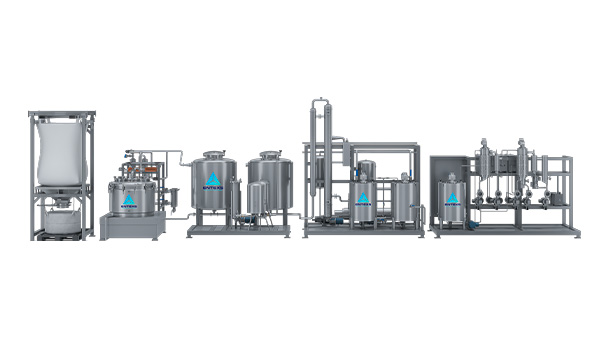
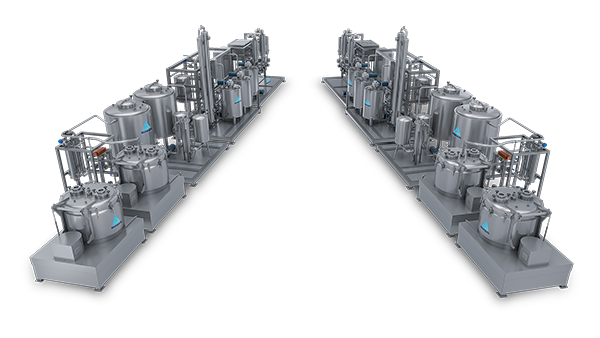
In a maturing cannabis market, the technology behind your extraction process is the core of your competitive position. Here’s what efficiency-first systems actually mean for your business, in plain terms.
98%
Solvent recovery rate
98%
Cannabinoid capture
1
Operator per run
100%
Automated process
The Business Case
What Inefficiency Is Really Costing You
Every pound of biomass that goes into your extraction system carries a real cost: growing, harvesting, drying, transporting. If your equipment leaves cannabinoids behind, wastes expensive solvent, or requires several staff members to supervise each run, those losses add up fast across hundreds of cycles per year.
Operators who invest in high-efficiency systems don’t just cut costs; they unlock better extract quality, higher throughput, and access to the premium markets that demand documented, consistent output.
The simple math: Higher cannabinoid capture + maximum solvent recovery + lower energy and labor costs = dramatically lower cost per gram of finished extract, and more value per gram sold.
Biomass Utilization
Getting Every Drop of Value From Your Biomass
Up to 98% cannabinoid capture means you’re monetizing almost everything locked inside your raw material, instead of leaving it in the spent biomass or losing it to inefficient processing steps.
✅ Controlled extraction parameters: Precise temperature and contact time pull maximum oil without degrading valuable cannabinoids or terpenes.
✅ Uniform solvent distribution: Engineered flow paths eliminate “dry zones” that leave compounds behind in conventional systems.
✅ Closed-loop processing: A sealed system prevents losses at every stage, from extraction to concentration and finishing.
✅ Selective extraction: Reduced co-extraction of unwanted waxes and lipids means less post-processing work and a purer initial extract.
✅ Consistent batch-to-batch output: Automated controls eliminate the yield swings that come from manual systems and variable operator technique.
Solvent Management
Solvent Recovery: Your Hidden Cost Center
Ethanol is both the most effective extraction solvent and one of your largest recurring expenses. In a facility processing thousands of pounds of biomass per week, solvent loss is not a rounding error; it is a significant line item that compounds run after run.
Systems that recover up to 98% of ethanol per cycle return it directly to the process, ready for the next run. That single capability can reduce annual solvent costs by tens of thousands of dollars, while also reducing the regulatory burden of storing and handling large solvent inventories.
Conventional approach
Recovery rates of 70–85% are typical. Significant ethanol is lost through open transfers, inefficient evaporation, and manual handling; every lost gallon is money out the door and a compliance exposure point.
Efficiency-first approach
Closed-loop automated recovery captures up to 98% of ethanol per cycle. Solvent is chilled, recaptured, and cycled back within the same run, with minimal handling and near-zero loss.
| Parameter | Conventional System | Efficiency-Optimized System |
|---|---|---|
| Ethanol recovery rate | 70–85% | Up to 98% |
| Cannabinoid capture | 80–90% | Up to 98% |
| Solvent handling method | Manual / open transfers | Fully closed-loop, automated |
| Residual solvent in extract | Variable; requires frequent retesting | Consistently within regulatory limits |
| Annual solvent replenishment cost | High: 15–30% lost per cycle | Minimal: no more than 2% loss per cycle |
Energy Consumption
Spending Less Power Per Pound Processed
Energy is a direct operating cost and, increasingly, an important consideration for cannabis businesses seeking investors or retail distribution partnerships. Inefficient systems rely on oversized refrigeration units, extended cycle times, and repeated heating and cooling stages that compound energy use per pound of output.
Next-generation systems optimize thermal management across the entire process, from initial extraction temperature to final solvent recovery, requiring fewer kilowatts per pound while delivering superior output quality.
Automation & Labor
Run More with Less — Full Automation, Minimal Staff
Labor is one of the most significant cost variables in extraction operations. Traditional systems require trained technicians present at every stage: loading, monitoring temperatures, managing solvent transfers, and making manual adjustments. Skilled extraction staff are expensive to hire, train, and keep.
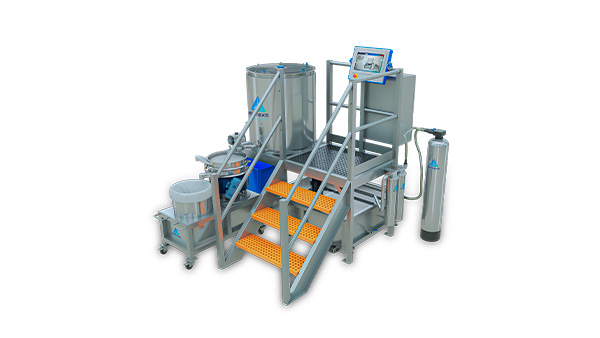
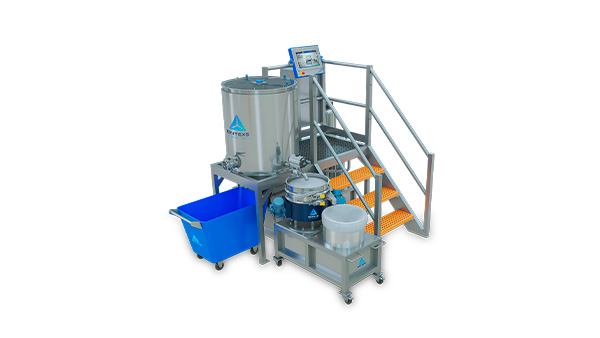
Fully automated systems eliminate most of those touchpoints. Once a run is initiated, the system executes each stage according to pre-programmed parameters, with continuous monitoring, built-in safety protocols, and automatic data logging, until the run is complete. One operator can monitor the entire process, freeing your team for higher-value work.
| Labor Factor | Manual System | Semi-Automated | Fully Automated |
|---|---|---|---|
| Operators required per run | 3–4 technicians | 2 technicians | 1 monitoring role |
| Continuous presence required | Yes | Often | No |
| Manual solvent transfers | Multiple per cycle | Some | Automated |
| Process parameter adjustments | Manual, operator-dependent | Mixed | Automated, pre-programmed |
| Batch records & data logging | Manual entry, error-prone | Partially automated | Automated, audit-ready |
| Ability to run parallel batches | Limited by staff | Limited | Scalable, system-managed |
| Operator training time | Weeks to months | 1–2 weeks | Days (system guided) |
Quality & Compliance
Pharmaceutical-Grade Output — and the Compliance to Back It Up
The most demanding cannabis buyers, including pharmaceutical distributors, high-end wellness brands, and regulated dispensary chains, require documented, reproducible quality. They need to know that what they buy today will match what they buy in six months.
Automated extraction systems with precise parameter control deliver exactly that: consistent cannabinoid profiles, predictable terpene retention, and low residual solvent content, run after run.
GMP Compliance: Good Manufacturing Practice standards require documented process control, equipment qualification, batch traceability, and formal SOPs. Fully automated extraction systems generate the logs, parameter records, and batch data that form the backbone of a GMP-compliant operation, satisfying both federal regulators and third-party certifiers without additional manual documentation overhead.
✅ Consistent cannabinoid profiles: Automated parameters eliminate batch-to-batch variation caused by manual inconsistency.
✅ Residual solvent compliance: Closed-loop recovery and precise evaporation keep extracts within federal and state limits, every time.
✅ Complete batch records: Automated logging satisfies GMP documentation requirements and COA traceability demands.
✅ Lower contamination risk: Minimal manual handling reduces exposure and cross-contamination risk at every step.
✅ Future-ready compliance posture: Systems designed for regulated markets adapt as federal cannabis legislation continues to evolve.
Technology Comparison
How Systems Stack Up: Side-by-Side
| Capability | Conventional | Semi-Automated | ENTEXS-Class Systems |
|---|---|---|---|
| Biomass utilization | 80–88% | 88–93% | Up to 98% |
| Solvent recovery | 70–82% | 85–92% | Up to 98% |
| Process automation | Manual | Partial | Full |
| GMP-ready documentation | No | Partial | Yes |
| Pharmaceutical-grade output | Inconsistent | Possible | Consistent |
| Energy efficiency | Low | Moderate | Optimized |
| Labor requirement | 3–4 operators | 2 operators | 1 monitor |
| Residual solvent risk | High | Moderate | Minimal |
| Cost per gram of extract | High | Moderate | Lowest achievable |
Common Questions
Questions Business Leaders Are Asking
Below are the most common questions from lab owners, operations managers, and investors evaluating a move to high-efficiency extraction systems.
ROI timelines vary by facility scale and current baseline, but the savings drivers are immediate and tangible: reduced solvent replenishment costs (recovering 97% vs. 80% of ethanol per cycle), lower labor costs (1 operator vs. 3–4), and higher extract yields per pound of biomass. For most mid-to-large facilities, efficiency-optimized systems recoup their premium over conventional equipment within 12–24 months, continuing to generate savings throughout their operating life. ENTEXS consultants can model your specific scenario based on your volumes and current costs.
ENTEXS systems are designed for flexible deployment across three scenarios: retrofit installation into existing labs with minimal structural changes, facility upgrades where existing equipment is being replaced or expanded, and new facility design from the ground up. The ENTEXS team provides free consultation to evaluate your existing infrastructure and recommend the integration path that maximizes efficiency while minimizing disruption to your ongoing operations.
That’s one of the core design principles: full automation means minimal operator expertise required. Once parameters are set, the system manages every stage of the extraction cycle independently. New operators typically reach full competency in days rather than the weeks or months required for manual systems. The interface is designed for clarity, with automated alerts, process status displays, and built-in safety protocols that guide the operator rather than relying on their judgment at every step.
If your current system recovers 80% of ethanol, you are replacing 20% of your solvent inventory each cycle. At commercial extraction scale, that can represent $50,000–$200,000 or more per year in ethanol costs alone, depending on your throughput. At 98% recovery, that cost drops to approximately 2% replacement per cycle, representing a reduction of 80–90% in annual solvent spend. Beyond direct cost, lower solvent consumption also reduces storage compliance requirements and the environmental footprint of your operation.
Pharmaceutical-grade extract, with documented purity, consistent cannabinoid profiles, and GMP-compliant production records, qualifies for channels that commodity extract cannot access: pharmaceutical manufacturers and API suppliers, high-end wellness and nutraceutical brands, licensed medical dispensary chains with strict supplier qualification requirements, and international export markets with formal quality documentation requirements. These channels typically command a significant price premium over undifferentiated bulk extract, directly increasing revenue per pound of biomass processed.
Yes. ENTEXS systems are engineered with regulatory compliance as a design priority, not an afterthought. Automated data logging, parameter traceability, equipment qualification documentation, and closed-loop solvent handling are all built into the system architecture, providing the documented evidence base that GMP audits and federal regulatory inspections require. As the regulatory landscape for cannabis extraction continues to evolve at the federal level, ENTEXS systems provide the compliance infrastructure to adapt ahead of emerging requirements.
Purpose-built for efficiency
ENTEXS: Where Every Resource Works Harder
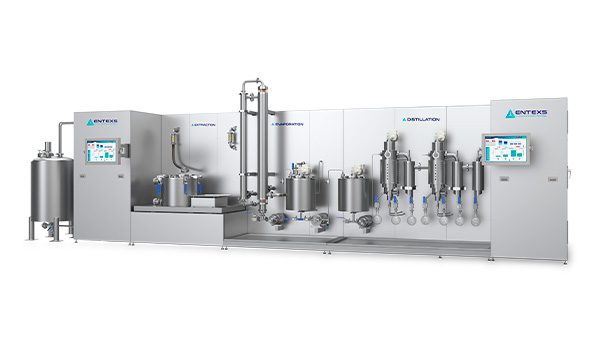
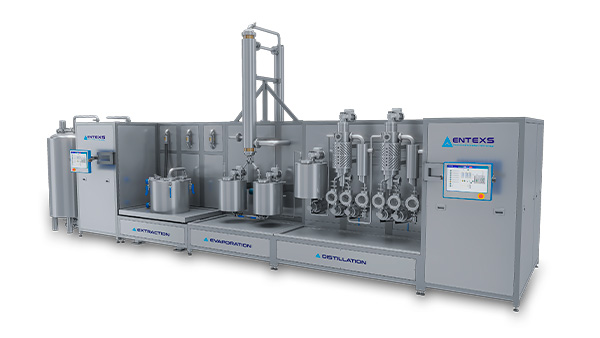
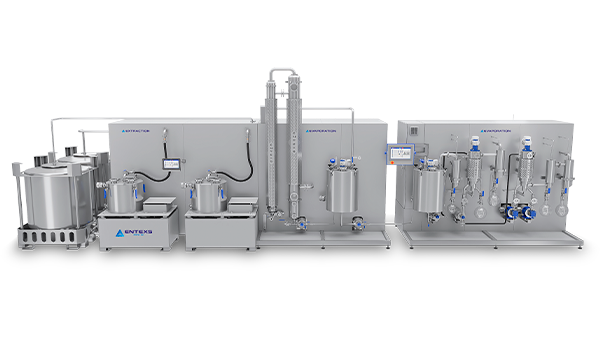
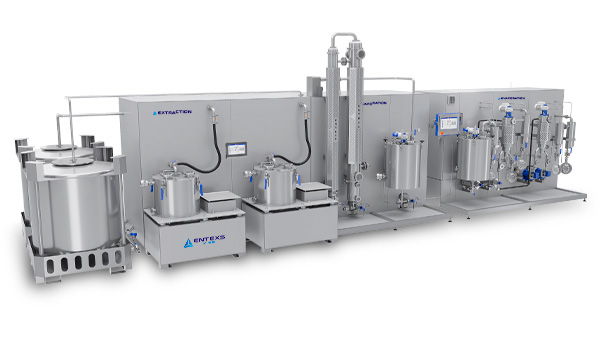
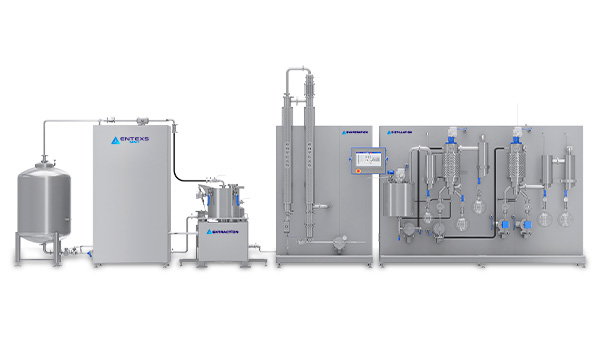
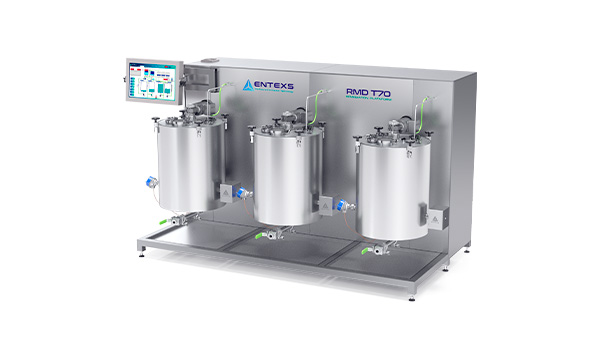
ENTEXS extraction systems are built around one goal: maximum efficiency across every dimension of your operation. Up to 98% solvent recovery, up to 98% cannabinoid capture, full automation, and pharmaceutical-grade output, delivering measurable savings and a refined, market-ready extract that commands premium pricing.
Whether you are upgrading an existing lab, retrofitting a production line, or designing a new facility from scratch, ENTEXS provides expert, no-cost guidance to implement the right system for your scale and objectives.
Request a Consultation
Fill out the form below and connect with one of our specialists. Whether you’re looking for expert guidance on extraction, remediation, or post-processing equipment—or simply have questions—we’re here to help you find the ideal solution for your specific needs. Let’s make your project a success!!
You may be interested

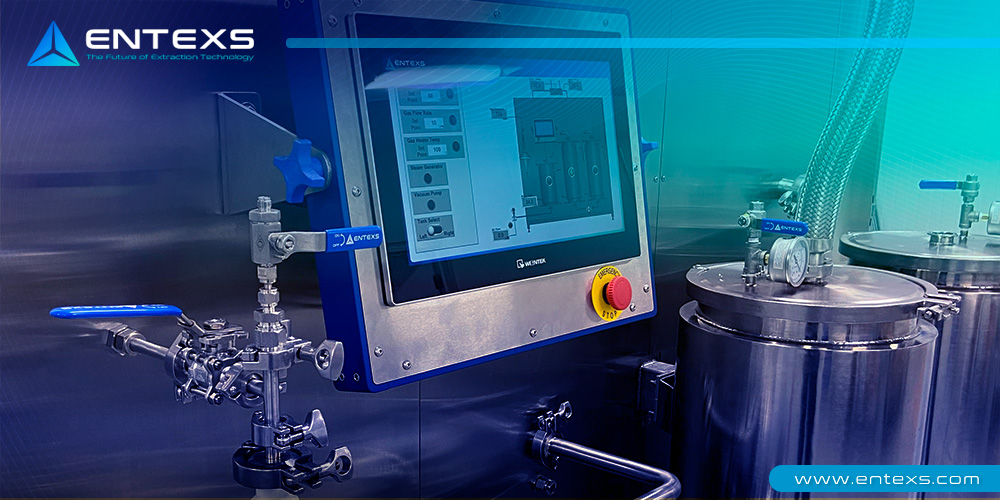
Best Extraction Systems
Learn about the most advanced, efficient, and cost-effective ethanol extraction systems on the market.



- Email: info @ entexs.com
- Toll Free: (888) 960-3689
- 3720 Trade Way, Cameron Park, CA 95682, USA
- ENTEXS is proud to be made in the USA
- © 2026 ENTEXS Corporation
- Privacy Policy