
A comprehensive guide for cannabis and hemp oil producers evaluating extraction systems for scale, quality, and regulatory alignment.
The Decisions You Make Today Will Define Your Lab's Future
The cannabis extraction industry is maturing rapidly — and the gap between operators who planned strategically and those who improvised is widening every year.
Effective cannabis extraction lab design has never been more consequential. Margins are compressing. Regulatory frameworks are tightening. Buyers — from white-label brands to pharmaceutical partners — are demanding purity levels and documentation standards that underpowered facilities simply cannot meet.
The extraction operations that are thriving share one thing in common: they made the right infrastructure decisions early. They chose technology that could scale, automation that could document, and equipment built to satisfy not just today’s compliance requirements but tomorrow’s.
Whether you’re building a new facility from the ground up, expanding existing capacity, or modernizing an aging operation, this guide delivers the strategic and technical framework you need to build it right the first time — and to avoid the costly mistakes that come from building it twice.
Who This Guide Is For
- Cannabis and hemp oil producers planning a new or expanded extraction facility
- Lab managers and operations directors are evaluating extraction technology upgrades
- Compliance officers navigating evolving GMP and regulatory requirements
Define Your Lab's Goals Before You Design Anything
The most expensive mistake in extraction lab planning is letting equipment availability drive strategy rather than strategy drive equipment selection.
Before a single piece of equipment is purchased or a facility layout is sketched, operators must answer a set of foundational questions. These answers shape every decision that follows — and failing to address them early creates compounding problems that no amount of downstream optimization can fix.
What Extract Types Will You Produce?
A lab optimized for crude oil looks fundamentally different from one designed to produce pharmaceutical-grade distillate or crystalline isolate. The downstream processing requirements — winterization, filtration, distillation, remediation — vary significantly, and your upstream extraction technology must align with those target products from day one.
What Is Your Target Throughput — Now and in Three to Five Years?
Many operators size their facility for current capacity, only to find themselves bottlenecked within eighteen months as demand grows. Equipment that cannot scale without a full facility redesign quickly becomes a liability. Build for your three-to-five-year volume projection, not your launch-day numbers.
What Regulatory Environment Are You Operating In?
A domestic hemp operator eyeing international markets has a very different compliance profile than a state-licensed cannabis producer positioning for federal rescheduling. The equipment you choose needs to accommodate that regulatory profile without expensive retrofits as rules evolve.
What Is Your Workforce Strategy?
Labor is one of the highest and most variable costs in extraction. Facilities designed around manual processes are exposed to human error, turnover risk, and batch inconsistency. Automation-first design trades initial capital investment for long-term operational resilience — and that trade almost always pays off.
Key Takeaways — Strategic Planning
- Align your extraction technology with your target extract types before purchasing anything
- Size for 3–5 year throughput projections, not current volume — under-building is expensive
- Map your regulatory environment to your equipment requirements early
- Workforce strategy should be a design input, not an afterthought
Choosing the Right Extraction Technology
The extraction method at the core of your system is the most consequential technical decision you’ll make. Get it right and everything downstream becomes easier. Get it wrong, and no amount of downstream optimization will compensate.
Each major extraction technology carries distinct trade-offs in throughput capacity, extract quality, solvent handling complexity, capital cost, and suitability for GMP environments. Understanding these trade-offs in the context of your specific production goals is essential to making an informed choice.
Hydrocarbon (Butane/Propane)
- Key Strengths: Excellent terpene preservation; full-spectrum extracts; high potency output
- Key Limitations: Requiresa classified electrical environment; flammability complexity; lower GMP suitability at high throughput
CO₂ (Supercritical)
- Key Strengths: Solvent-free final profile; tunable selectivity for target compounds
- Key Limitations: High capital cost; slower throughput at scale; significant technical expertise required
Ethanol (Cold/Cryo)
- Key Strengths: High throughput; GRAS-classified; GMP-compatible; strong economics at scale; excellent solvent recovery
- Key Limitations: Requires chilling infrastructure; co-extraction management needed; less effective for terpene preservation
For operators targeting distillate or isolate at meaningful production volumes, a well-engineered ethanol extraction system — fully closed-loop, with integrated solvent recovery — forms the most defensible foundation for a pharmaceutical-grade, scalable operation.
Ethanol’s GRAS (Generally Recognized As Safe) classification under FDA frameworks, combined with its compatibility with established pharmaceutical manufacturing standards, makes it the natural choice for producers building toward GMP certification or serving regulated markets.
Key Takeaways — Extraction Technology
- Technology selection sets the ceiling for everything downstream — choose based on end-product, not familiarity
- Ethanol extraction offers the strongest combination of throughput, GMP compatibility, and scalability
- CO₂ excels in niche quality applications but trades throughput and capital efficiency
- Hydrocarbon systems face regulatory friction in high-volume GMP environments
Automation: From Optional Upgrade to Operational Necessity
Automation in cannabis extraction is no longer a premium feature. It is rapidly becoming the baseline requirement for any operation serious about quality, compliance, and competitiveness.
In a manual extraction process, every human touchpoint is a potential source of variation. Inconsistent soak times, imprecise temperature control, incomplete solvent purging, and documentation gaps — each one is a small deviation. Across hundreds of production runs, those deviations accumulate into unpredictable output and audit vulnerabilities that no quality control program can fully correct.
Batch-to-Batch Consistency at Scale
An automated extraction system sets process parameters — temperature, pressure, flow rates, hold times — once, validates them, and repeats them identically across every production run. The result is batch-to-batch consistency that manual operations cannot match at volume. That consistency is exactly what pharmaceutical buyers and white-label customers require as the foundation of a sourcing relationship.
Labor Economics and Risk Reduction
A well-designed automated extraction line can be operated by significantly fewer personnel than a comparable manual system. More importantly, the personnel it does require are freed from routine process steps to focus on higher-value quality oversight functions. In a market environment where labor costs are rising and skilled extraction technicians are in short supply, this is a meaningful competitive advantage.
Cloud Monitoring and Remote Oversight
The most advanced automated systems include cloud-based monitoring that allows process supervisors to observe real-time operational data, receive alerts, and, in many cases, make process adjustments remotely. This capability has practical implications for multi-shift operations, for facilities with distributed production sites, and for demonstrating real-time process control to regulatory auditors.
Cloud connectivity also enables continuous data logging — the backbone of GMP documentation. Every parameter, every run, every deviation: automatically recorded and retrievable. This is not just an operational convenience; it is an audit advantage that facilities built on manual record-keeping cannot replicate.
Key Takeaways — Automation
- Automation eliminates the leading cause of batch inconsistency: human variability
- Cloud-connected systems generate GMP-compliant documentation automatically — no manual logs required
- Automated lines require fewer operators, directly reducing labor cost and workforce risk
- Remote monitoring enables multi-site oversight and faster response to process deviation
GMP Compliance: Engineer It In, Don't Retrofit It
Good Manufacturing Practice is coming to cannabis extraction — whether operators prepare for it or not. The facilities that built compliance into their infrastructure from day one will have a decisive competitive advantage.
GMP compliance in the context of cannabis extraction means meeting the design, documentation, and process control standards used in pharmaceutical manufacturing. As US federal regulatory frameworks evolve and international markets — particularly in Europe and emerging Asia-Pacific regions — demand higher standards, producers with GMP-ready infrastructure will access premium markets that others cannot reach.
What GMP Means in Practice for Extraction Labs
In a cannabis extraction context, GMP encompasses equipment design that supports cleanability, with surfaces and materials that resist contamination. It means a closed-loop system architecture that prevents solvent exposure, cross-contamination, and product loss. It means validated processes with documented protocols, deviation records, and batch traceability from raw biomass to final product.
It also means an equipment and facility design that survives regulatory inspection — not just meeting today’s requirements, but demonstrating the process controls that regulators at every level are actively moving toward.
The Cost of Retrofitting vs. Engineering In
Operators who attempted to impose GMP controls on systems not designed for them have learned an expensive and time-consuming lesson. Compliance is far easier and less costly to engineer into infrastructure from the beginning than to add to equipment built for a different purpose. Design your facility to the standard you aspire to, not the one you’re currently required to meet.
Key Takeaways — GMP Compliance
- GMP compliance will increasingly determine market access — plan for it now
- Closed-loop system design is a GMP requirement, not just a safety feature
- Automated documentation eliminates the manual record-keeping gap that kills audits
- Equipment designed for pharmaceutical-grade manufacturing costs less to validate than retrofitted systems
Solvent Recovery: The Hidden Profit Driver in Ethanol Extraction
In a high-volume ethanol extraction operation, your solvent recovery rate isn’t a secondary metric — it’s a primary economic driver that compounds across every production run for the life of the facility.
Ethanol represents a high operating cost in any large-scale extraction operation. Every percentage point of recovery that falls below the maximum efficiency threshold represents direct margin erosion — multiplied across thousands of liters processed per month, and across years of operation.
The 97%+ Recovery Standard
Industry-leading solvent recovery extraction systems target recovery rates of 97% or higher. At scale, the difference between a 90% and a 97% recovery system is not marginal. Over a production year at meaningful volume, the ethanol cost differential alone can represent six figures in operating savings — before accounting for waste handling, environmental compliance, and safety costs associated with managing larger solvent inventories.
Safety, Sustainability, and Investor Expectations
High-efficiency solvent recovery also reduces the volume of ethanol that must be stored and handled as a hazardous material on-site. This has direct implications for fire safety, environmental compliance, and insurance costs. It also increasingly matters to investors: sustainability metrics have become part of the due diligence process for institutional cannabis investment. A facility that can demonstrate minimal solvent waste is a more attractive and lower-risk asset.
Key Takeaways — Solvent Recovery
- 97%+ recovery rate should be the minimum standard for any large-scale ethanol operation
- Each 1% improvement in recovery translates directly to reduced operating costs at volume
- Lower solvent inventory = lower safety risk, lower insurance exposure, and lower hazmat compliance costs
- Strong recovery metrics strengthen the environmental and sustainability case for investors
Modular and Scalable System Design: Protect Your Capital Investment
The cannabis market moves fast. A facility that hits its processing ceiling during a demand surge faces a difficult choice: turn away revenue or undertake a disruptive, expensive infrastructure overhaul to respond.
One of the most common and costly mistakes in extraction facility planning is building to current capacity with no viable path to expansion. Modular extraction equipment addresses this problem directly — and it’s one of the most important design principles that separates future-proof operations from those that outgrow their infrastructure prematurely.
What Modular Architecture Actually Means
A modular system architecture allows capacity to be expanded — additional extraction vessels, additional recovery units, additional distillation throughput — without redesigning the facility around the equipment. The core system architecture remains valid at a larger scale, and expansion can be planned and executed incrementally as capital and demand allow.
This means the initial capital investment is protected. You’re not buying a system that becomes obsolete as you grow. You’re buying a platform that grows with you.
Scalability as an Investment Signal
For investors evaluating extraction operations, modular scalability is a meaningful value indicator. It signals that the operation was built with a long-term business model in mind, and that capital allocated to infrastructure won’t need to be written off and replaced as the business scales. Scalable modular extraction equipment is, in this respect, a financial argument as much as a technical one.
Key Takeaways — Modular Scalability
- Modular architecture allows capacity expansion without facility redesign — protecting initial capital
- Size for 3–5 year projections and plan modular expansion steps in advance
- Scalable systems signal operational sophistication and protect asset value for investors
- Non-modular systems create false economies — initial savings are often dwarfed by future expansion costs
From Raw Biomass to Distillate: What a Complete Line Looks Like
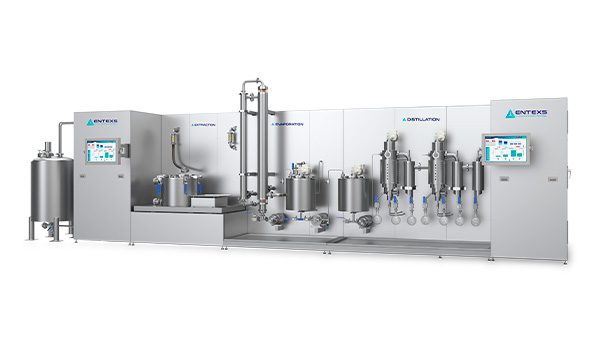
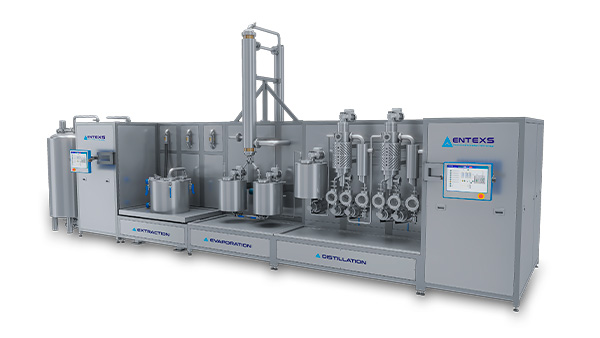
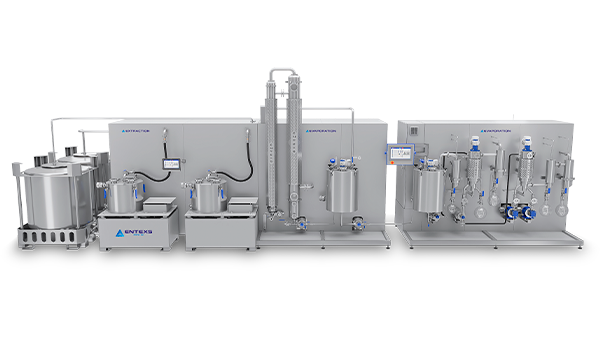
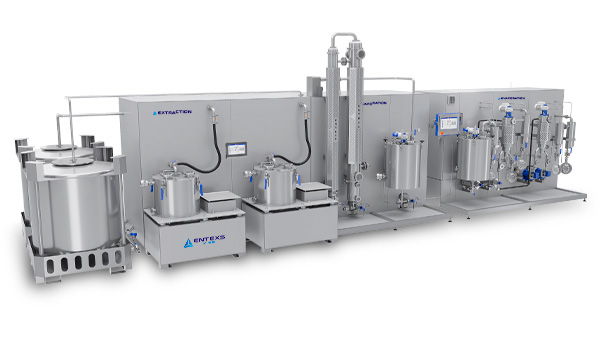
A high-performing extraction operation is not a collection of individual equipment pieces — it’s an integrated production line in which each stage feeds seamlessly into the next.
Understanding what a complete, integrated extraction line involves — and why sourcing it from a single provider matters — is essential for operators planning a serious pharmaceutical-grade operation.
The Stages of a Complete Extraction Line
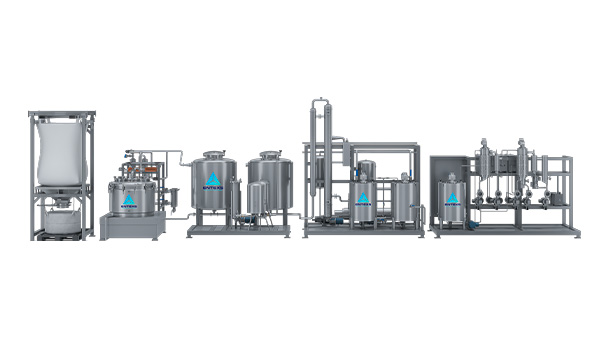
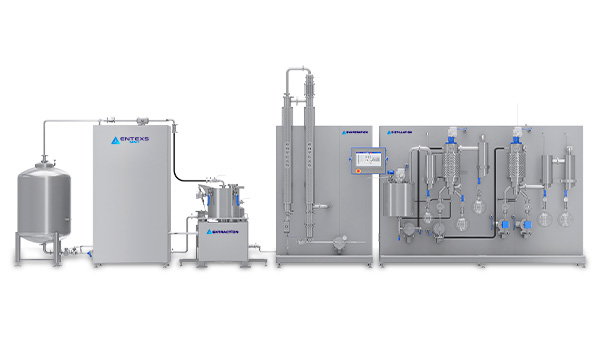
A fully integrated line begins with biomass intake and preparation: size reduction, moisture management, and loading processes that set the stage for efficient extraction. From there, chilled ethanol extraction proceeds under controlled temperature and residence time conditions, followed by miscella separation and transfer to the recovery stage.
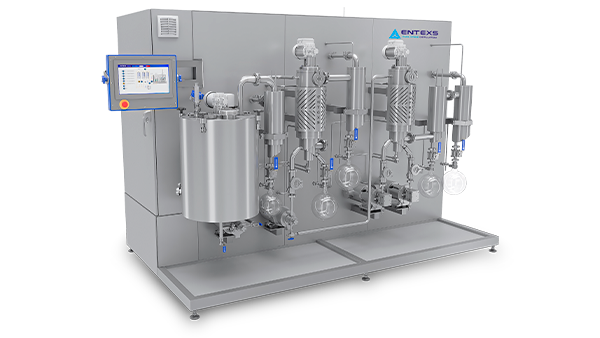
Winterization and filtration remove waxes, lipids, and chlorophyll from the crude extract. The filtered miscella then moves into evaporation — typically a falling film evaporator — where the bulk of the ethanol is recovered for reuse. The concentrated crude oil advances to the cannabis distillation system, where short-path or wiped-film distillation isolates cannabinoids to pharmaceutical-grade purity.
For producers serving compliance-sensitive markets, a THC remediation module integrated downstream ensures compliant output across all batches before final product packaging.
Why Single-Source Integration Matters
Sourcing a fully integrated line from a single technology provider is a strategic advantage that operators frequently underestimate. System compatibility — across flow rates, temperature requirements, connection specifications, and control architectures — is guaranteed by design rather than improvisation. Support, validation, and troubleshooting are simplified because one partner is accountable for the entire line. And the regulatory validation pathway is far cleaner when the system was designed as a cohesive whole.
Key Takeaways — Complete Extraction Line
- Each stage of the line must be matched to the others in throughput, temperature, and process specification
- A single-source provider ensures system compatibility and simplifies validation
- Falling film evaporation is the efficiency standard for high-volume ethanol recovery
- Short-path or wiped-film distillation is the pharmaceutical-grade standard for cannabinoid isolation
THC Remediation: Building Compliance Into the Production Process
For hemp-derived product producers, THC remediation is not an optional module — it’s a compliance requirement embedded in the commercial reality of today’s market.
With legal THC thresholds enforced across US state markets and international jurisdictions, the ability to reliably reduce total THC to compliant levels is a production necessity. Producers who rely on external contractors for remediation introduce chain-of-custody complexity, documentation gaps, and throughput bottlenecks that erode both compliance confidence and operating margins.
The Case for Integrated Remediation
A THC remediation system integrated directly into the extraction line allows producers to process biomass of varying cannabinoid profiles and deliver consistently compliant output — without routing material to external service providers. The remediation module fits within the documented production process; its outputs are recorded alongside all other batch data, and the compliance story presented to regulators and customers is clean, auditable, and unambiguous.
Future-Proofing Across Markets
As the hemp-derived cannabinoid market expands into new product categories and new international markets — each with its own THC thresholds and testing requirements — producers with integrated remediation capability will have structural flexibility that those without it lack. The ability to rapidly adjust output specifications to meet a new market’s requirements, without facility modifications or external contractor dependency, is a durable competitive advantage.
Key Takeaways — THC Remediation
- Integrated remediation eliminates external contractor dependency and chain-of-custody risk
- In-line remediation fits within GMP documentation frameworks — external remediation typically does not
- Producers serving multiple markets need a flexible remediation capability to meet varying THC thresholds
- Remediation as a standard module, not an afterthought, lowers total system cost and complexity
Entexs: The Complete Extraction Solution Built for Serious Operators
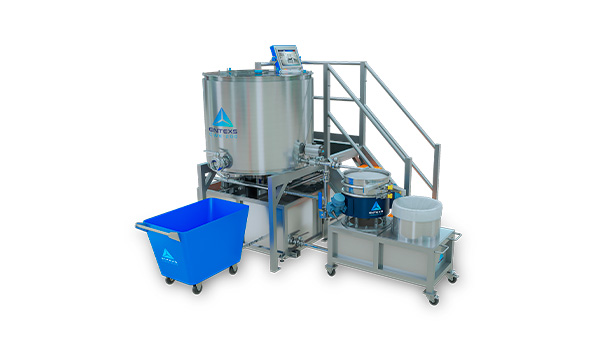
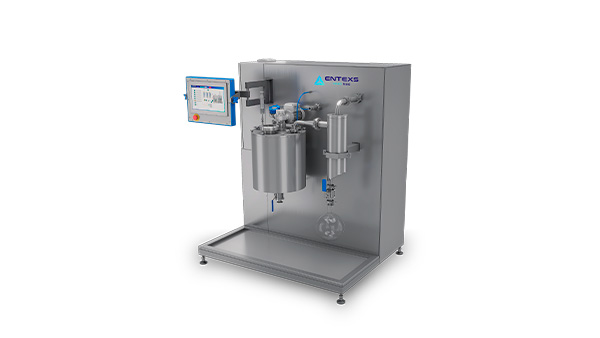
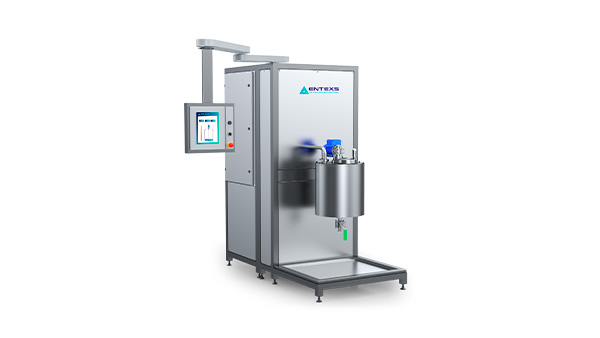
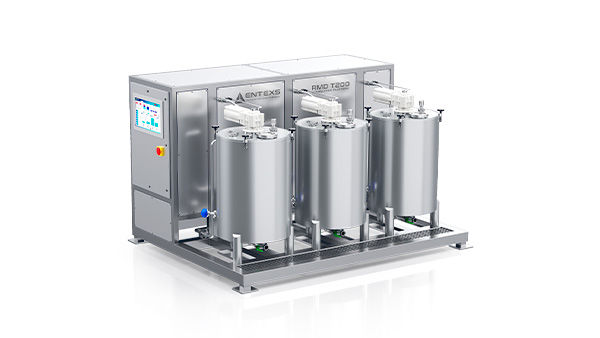
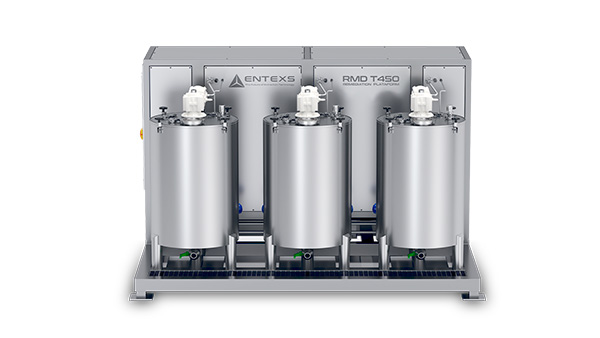
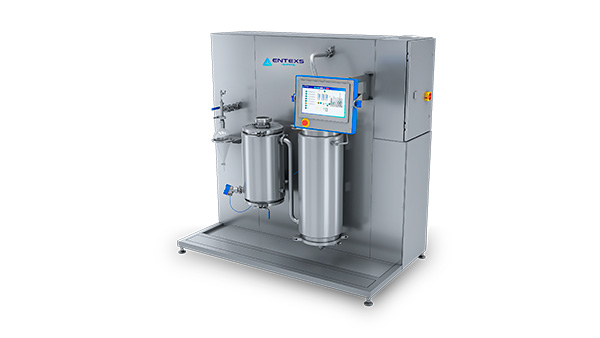
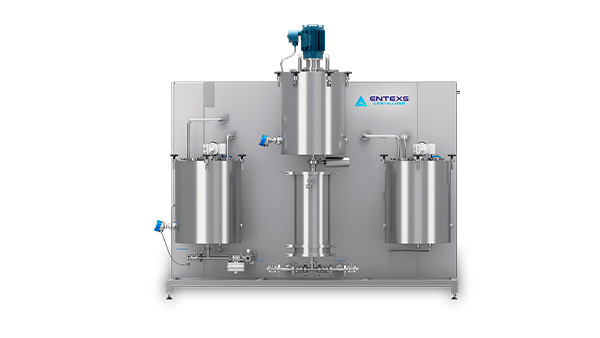
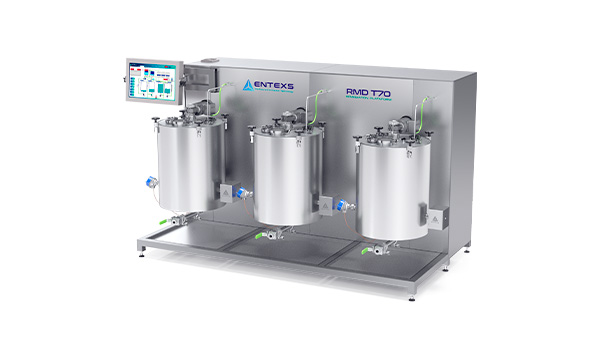
Every principle covered in this guide — automation, GMP-first design, high-efficiency solvent recovery, modular scalability, integrated remediation, and end-to-end system coherence — is embodied in the Entexs extraction platform.
Entexs was designed from the ground up to answer the question that every serious extraction operator eventually asks: what would a purpose-built, pharmaceutical-grade, fully automated, scalable extraction system look like if it were designed without compromise?
End-to-End Integration, One Technology Partner
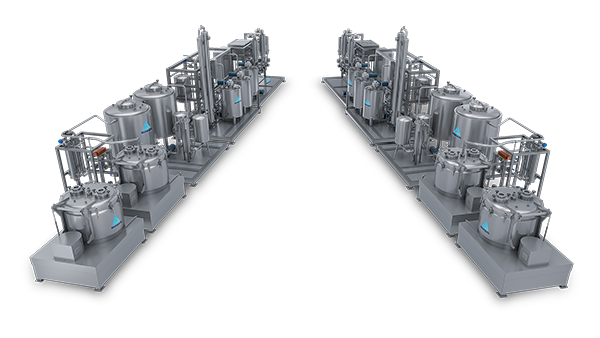
The Entexs platform delivers a complete extraction line — from raw biomass through to pharmaceutical-grade distillate — with an optional THC remediation module for producers serving compliance-sensitive markets. Because every stage of the line was engineered to work together, operators benefit from guaranteed system compatibility, simplified validation, and a single point of accountability for support, training, and optimization.
Automation That Changes the Operational Equation
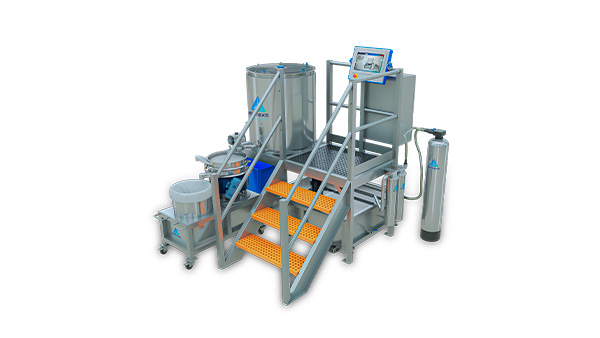
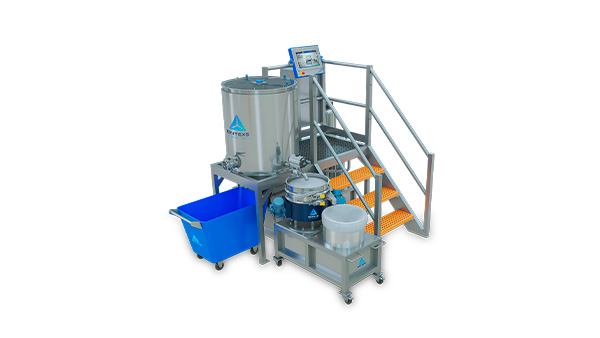
Entexs systems are built around complete automation that minimizes the number of personnel required for operation, eliminating the sources of human variation that undermine batch consistency in manual facilities. Operators can run high-throughput production schedules with lean teams — not because safety or quality is compromised, but because the system handles the process variables that humans shouldn’t be managing manually.
Cloud Monitoring and Real-Time Process Intelligence
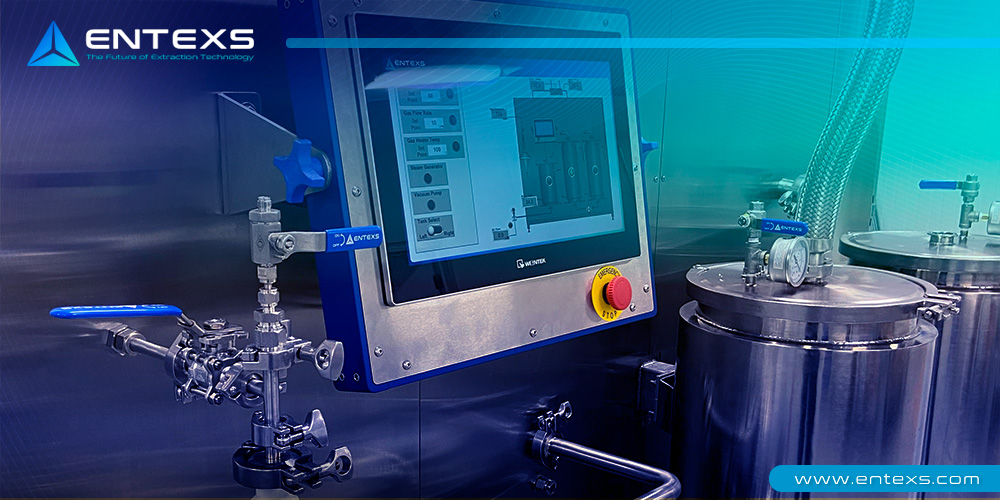
Cloud-based monitoring gives Entexs operators real-time visibility into system performance from anywhere — live dashboards, automated alerts, and remote parameter oversight. The same cloud connectivity generates the continuous process data logs that GMP documentation frameworks require, making regulatory audits a demonstration of documented excellence rather than a scramble to reconstruct records.
97%+ Solvent Recovery and Closed-Loop Safety
Entexs systems achieve 97%+ solvent recovery rates — making them among the most economically and environmentally efficient configurations available for large-scale ethanol extraction. The fully closed-loop system design ensures complete solvent containment throughout the process, protecting operator safety, minimizing environmental impact, and meeting the design standards that regulators expect from pharmaceutical-grade cannabis compliance equipment.
GMP-Standard Design for Current and Future Regulatory Environments
Entexs systems were designed to be compatible with GMP frameworks applicable to current US regulatory requirements and international standards. For operators building facilities intended to serve pharmaceutical partners, international markets, or any buyer for whom documentation and process control are prerequisites, this is foundational — not a selling point. It’s the standard the industry is moving toward, and Entexs is already there.
The Entexs Platform at a Glance
- Full end-to-end extraction line: biomass intake through pharmaceutical-grade distillate
- Optional integrated THC remediation module for compliant output across all markets
- Complete automation — minimal personnel required, maximum batch consistency
- Cloud-based monitoring and automated GMP documentation
- Closed-loop system design for safety and solvent containment
- 97%+ solvent recovery rate — industry-leading economic and environmental performance
- Modular architecture — designed to scale with your business without facility redesign
Build Once, Build Right
The cannabis extraction industry is entering a phase of consolidation and professionalization that rewards operators who built with intention — and challenges those who built for expediency.
The facilities that will define the industry’s next decade are being designed right now. The decisions being made in those planning processes will determine which operations scale efficiently, which ones stagnate, and which ones spend the next several years in expensive, disruptive retrofits that were entirely avoidable.
Building a future-proof extraction lab means choosing technology that scales, automation that documents, compliance infrastructure that evolves with regulation, and a system designed as a coherent whole rather than assembled from mismatched parts. It means partnering with a technology provider that understands pharmaceutical-grade manufacturing — not just cannabis processing — and has built a platform capable of competing at the highest level today and in the years ahead.
The cost of building correctly from the start is a fraction of the cost of rebuilding later. The time to make the right decision is before the equipment is ordered, before the facility is designed, and before the first production run reveals the limitations of an underpowered system.
Ready to Build the Extraction Operation Your Business Deserves?
Connect with the Entexs team to explore how a complete, automated, GMP-ready extraction line can be configured for your specific throughput, product, and compliance requirements.
Request a Consultation
Fill out the form below and connect with one of our specialists. Whether you’re looking for expert guidance on extraction, remediation, or post-processing equipment—or simply have questions—we’re here to help you find the ideal solution for your specific needs. Let’s make your project a success!!
You may be interested

Best Extraction Systems
Learn about the most advanced, efficient, and cost-effective ethanol extraction systems on the market.



- Email: info @ entexs.com
- Toll Free: (888) 960-3689
- 3720 Trade Way, Cameron Park, CA 95682, USA
- ENTEXS is proud to be made in the USA
- © 2026 ENTEXS Corporation
- Privacy Policy